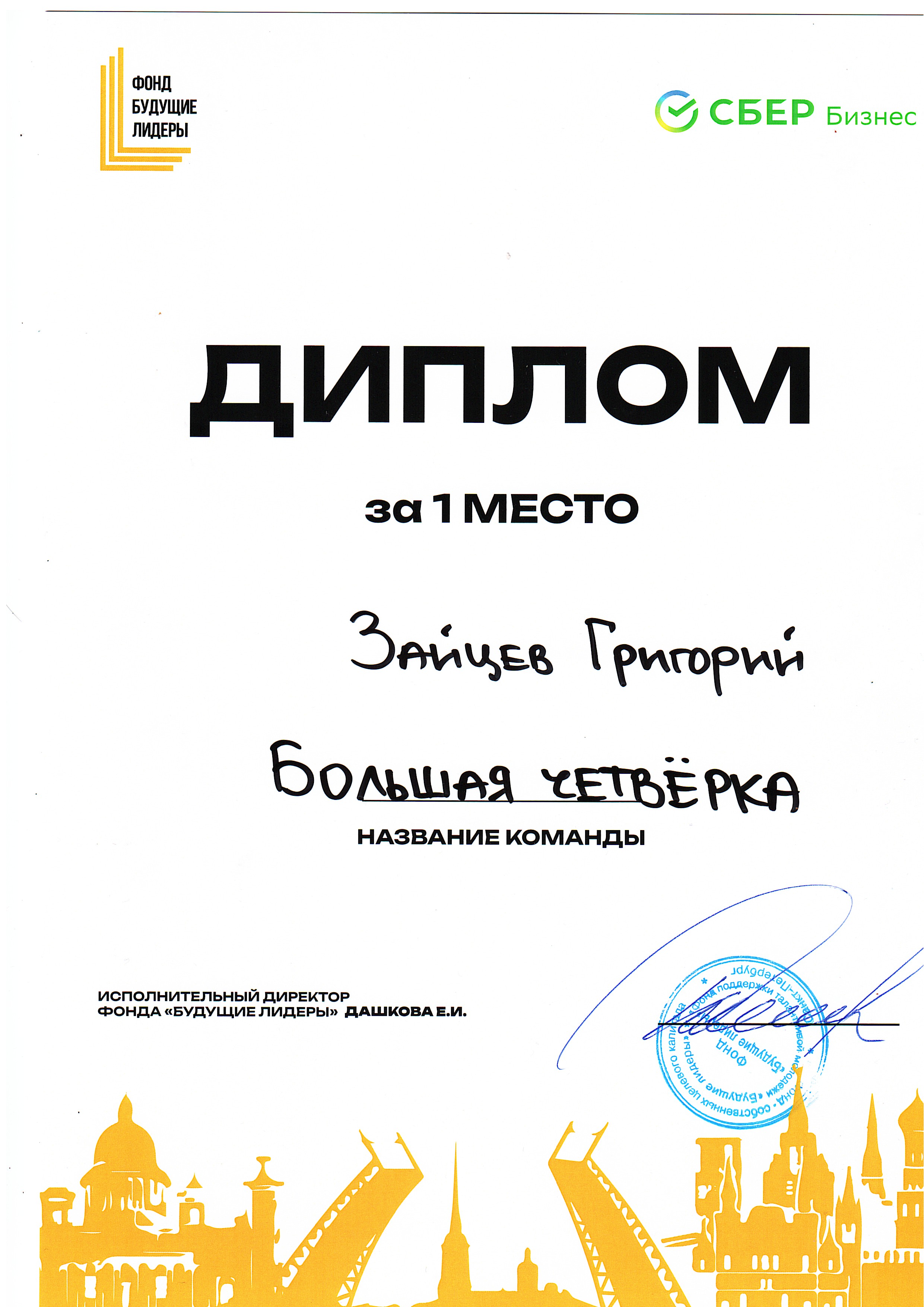
Sber Business × Future Leaders Foundation: first place with Easy Business
How our team turned the barriers of a first banking experience into a desktop and mobile concept, prepared 30 slides and took first place out of 25 teams.

Context
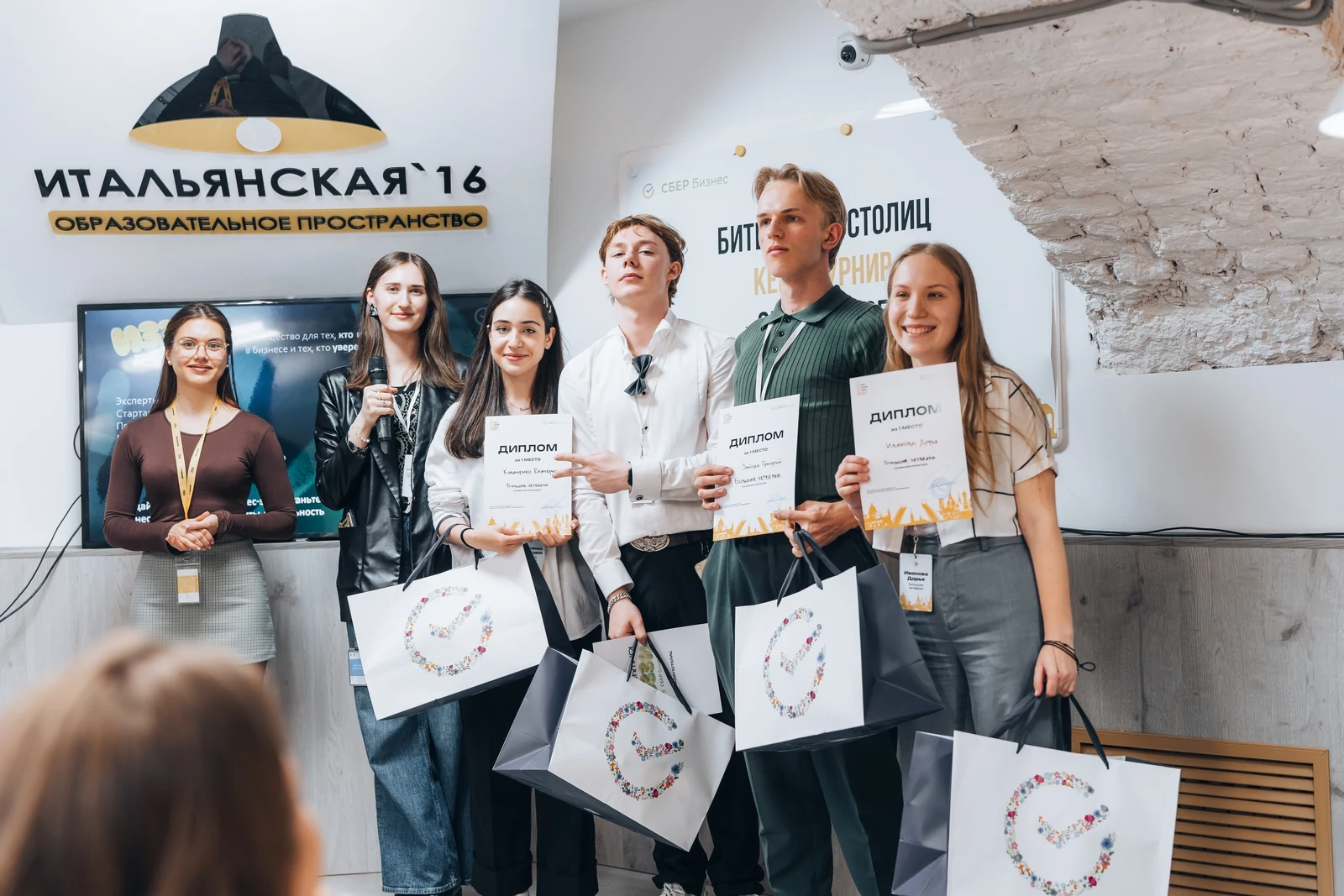
On 25 May 2025 our team, the “Big Four”, competed in the Sber Business × Future Leaders Foundation case championship. The Saint Petersburg stage brought together 100 participants in 25 teams.
We worked on a banking case for small business and defended our solution before Sber experts. Preparation took a week of teamwork.
We had to take an idea from a discussion inside the team to a presentation: explain which problem we solve, why we chose this approach and how an entrepreneur would use the service.
The solution: Easy Business
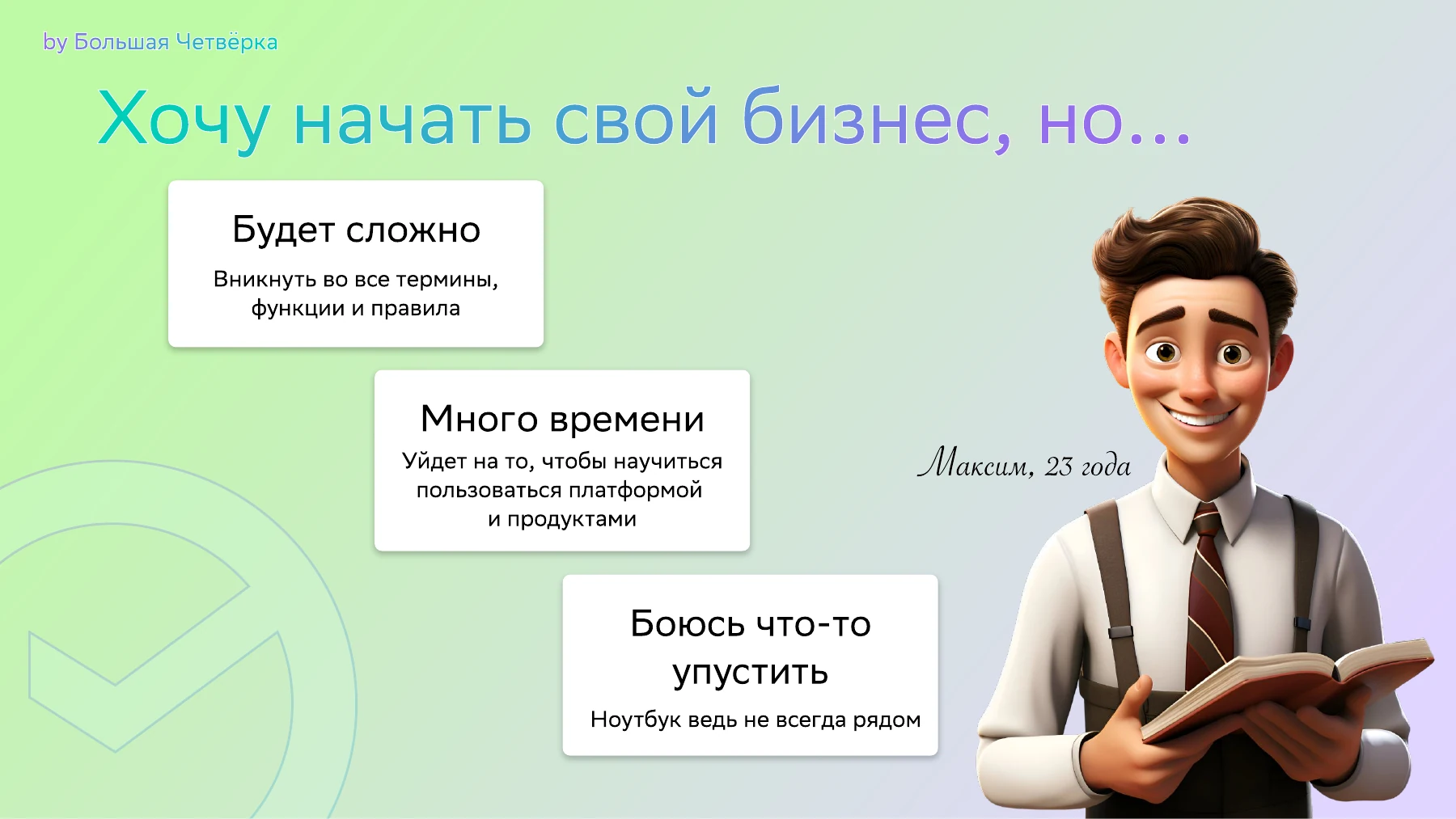
We looked at a young entrepreneur who is just opening a business and using a banking service for the first time. They need to find the right action, understand unfamiliar terms and choose the features that are useful at the start.
We identified three barriers: how hard the features and terms are to learn, the time training takes, and the need to use the service away from a laptop. The deck built these around a user persona, someone starting their own business.
The final deck cited a small survey of 10 people aged 19–25 who had been running their own business for under three years. We used it to discuss priorities: what a person needs in finances, services, analytics and documents. It was a check of hypotheses for the case.
Interface changes had to keep Sber’s recognisable colours and shapes. At the same time we adapted navigation and the presentation of features to a young entrepreneur’s first experience.
The core of the solution is an adaptive interface: the set of features and how they are presented change as the app is used. A newcomer needs a clear start, and someone who has mastered the service needs faster access to familiar actions.
Concept screens
For the defence we prepared a final deck of 30 slides. It showed desktop and mobile screens tied to an entrepreneur’s specific actions:
- Finances: viewing accounts, making a payment, issuing an invoice and getting a statement.
- Services: quick access to accounting, loans, business cards and acquiring.
- Analytics and documents: separate sections that make the right information easier to find.
- Help: learning materials, support and an assistant next to the main scenario.
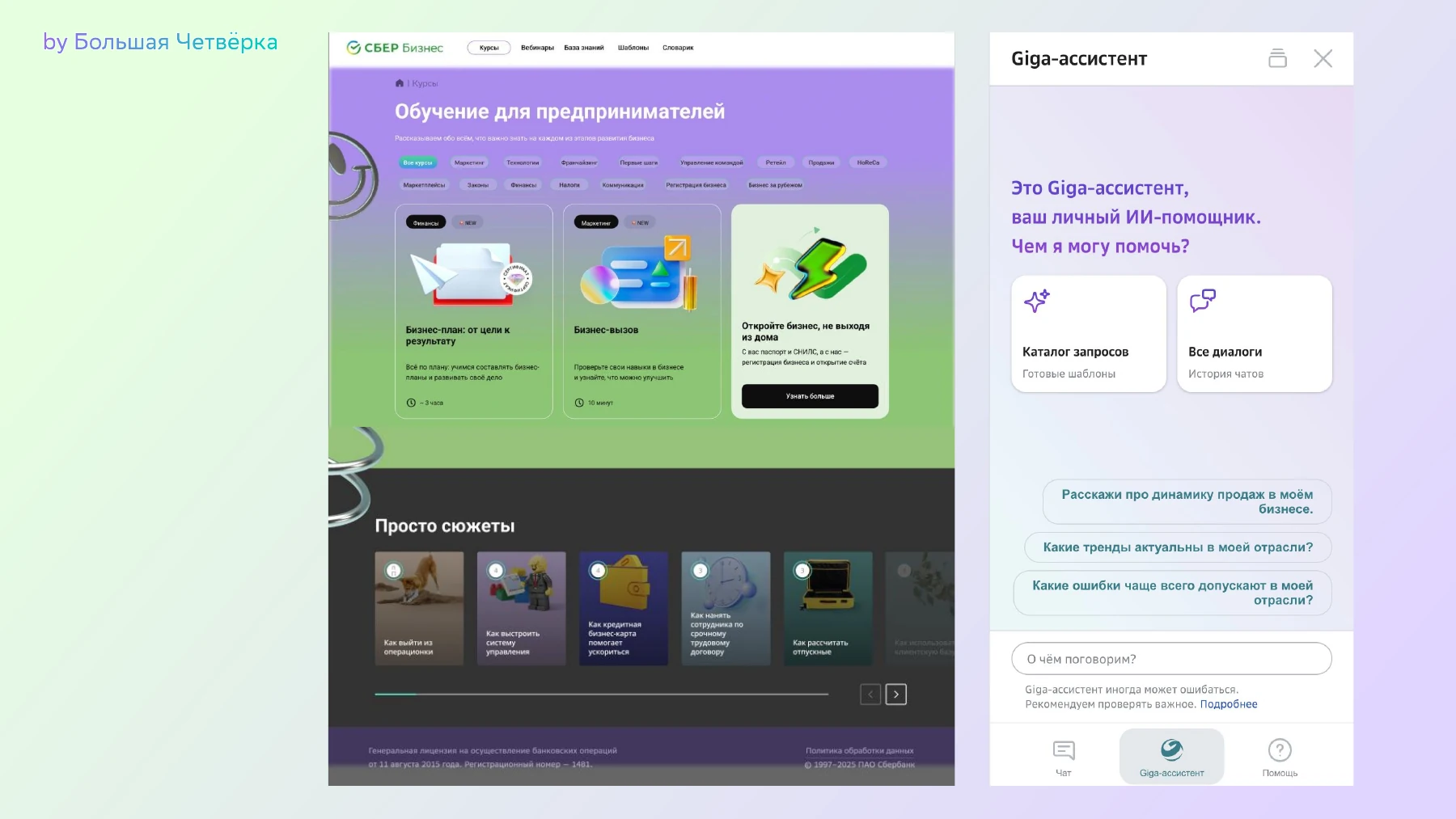
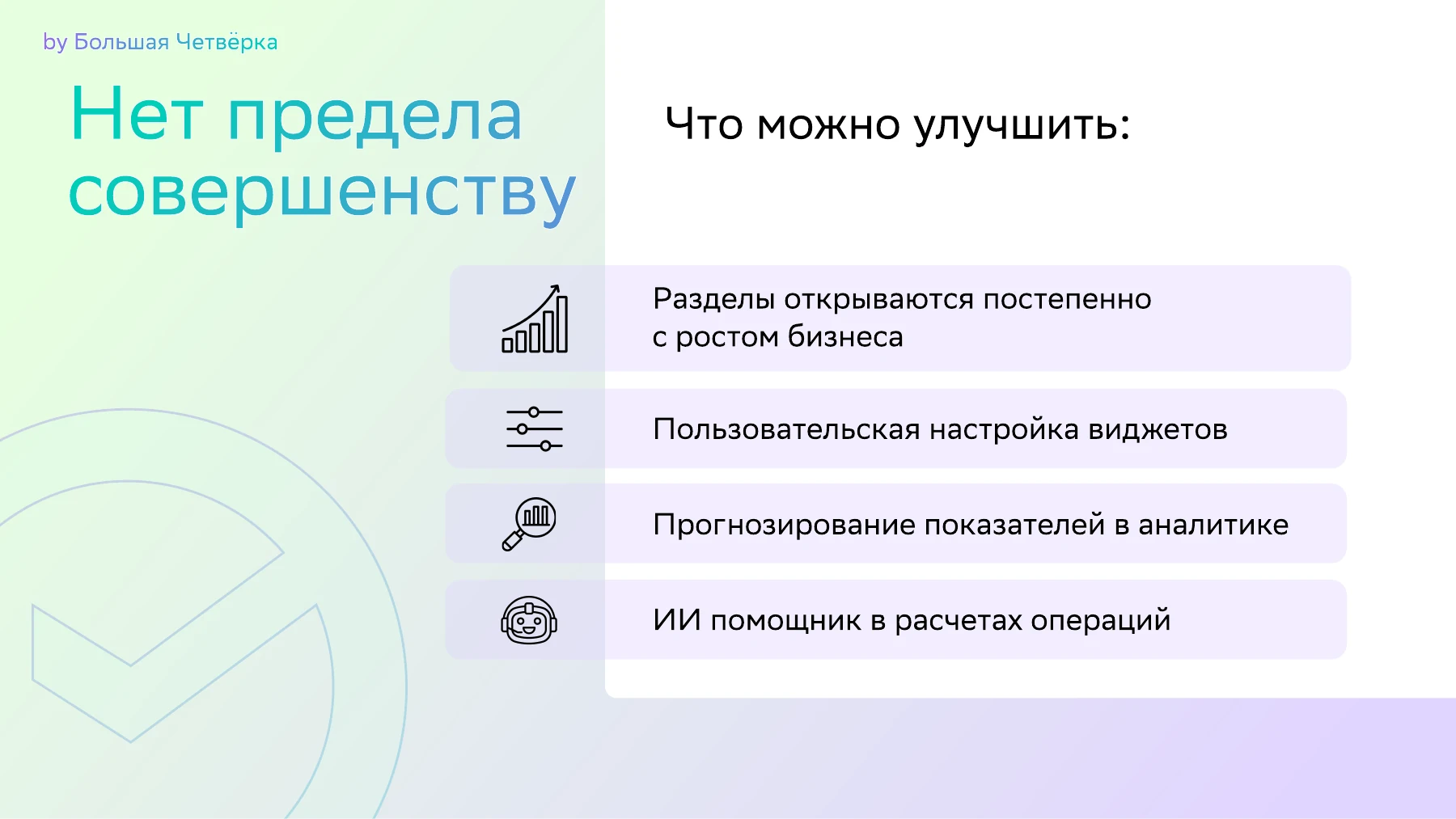
The slides show the proposed user journey and how the screens work. For further development we singled out opening sections gradually as the business grows, widget customisation, forecasting in analytics and help with calculations.
My contribution
I proposed changing the interface as the app gets used. I took part in preparing the Easy Business UX concept and in defending the team’s solution.
Beyond the product part, I discussed promotion with SberCat, Sber’s mascot: a blog, a user trend, a city mechanic with footprints and QR codes, and coordinated work across channels. The final deck included five marketing slides with promotion options. This added an answer to how to get a young audience’s attention.
What interests me in product work is the link between the user’s task and how the system is built: which actions are really needed, what information to show at each step and how to explain it when defending a project.
How we prepared the defence
We had five minutes to present and two more for jury questions. In the working script we prepared a short interactive part: ask the audience to find the right action as a newcomer would, show the difficulties and move on to the solution.
So the story was built around a specific user journey. Interface changes had to connect to what an entrepreneur wants to do when first meeting the service.
Result
The team took 1st place out of 25 teams and earned the chance to represent Saint Petersburg in the interregional final against a team from Moscow.
After the defence we got feedback from the experts. For me this case was experience in building a solution together and presenting it with reasoned arguments.