Match: a Telegram Mini App for a business community
My contribution to the ecosystem of student business clubs: networking, learning, referrals, the responsive web part and release preparation.

Who Match was for
Match is a Telegram Mini App for The Match Club, a community of student business clubs. One product combined meeting people, looking for a job or a team, presenting startups, and learning.
I worked on the project as a fullstack developer from February to April 2026. I joined the existing product after a test task and improved the interface, the related mechanics and release preparation.
An ecosystem around the community
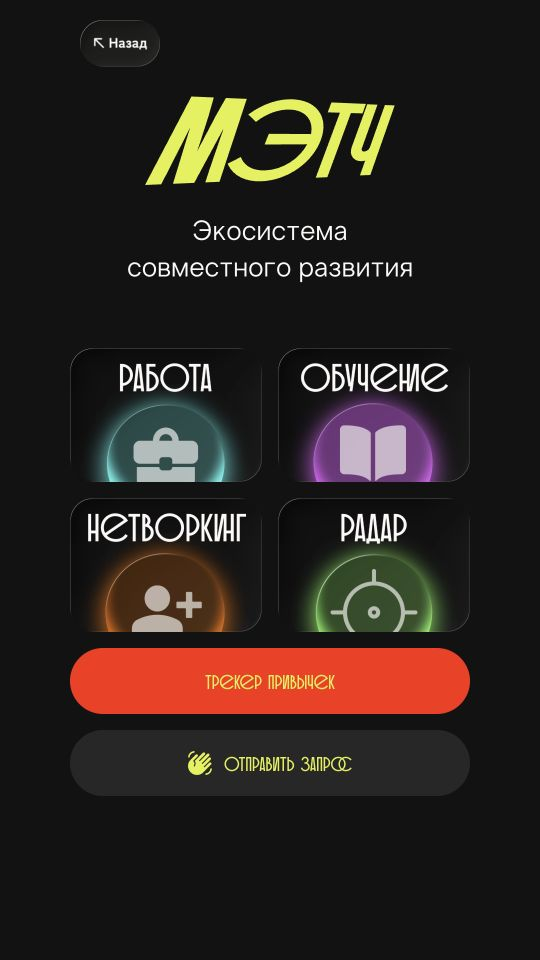
Networking was one part of the product. An introduction could lead to a job application, a search for a startup teammate or a course. So the sections had to be connected through the profile and clear navigation.
| Section | User scenario |
|---|---|
| Profile | Photo, city, skills, values, “looking for” and “can help with” requests, work samples |
| Networking | Swipes, likes, mutual matches, mega-likes and going back to a skipped card |
| Filters | Age, city, gender, what the person is looking for, skills and values |
| Contact | Moving to Telegram after a match, where the conversation continues |
| Work | Resumes, vacancies, favourites, applications and their statuses |
| Radar | Startups, team search, member invitations and favourites |
| Education | Course card, purchase and channel access; lectures with video and podcasts |
| Calendar | Events by day, streams, meetings and other activities |
| Tracker | Habits, daily check-ins, sprints, completed tasks and leaderboards |
| Subscription | Networking+: extended networking features and action limits |
| Referrals | Inviting members and a reward for a target action |
| Administration | Users, courses, events, subscriptions, campaigns, analytics and mailings |
Networking and the profile
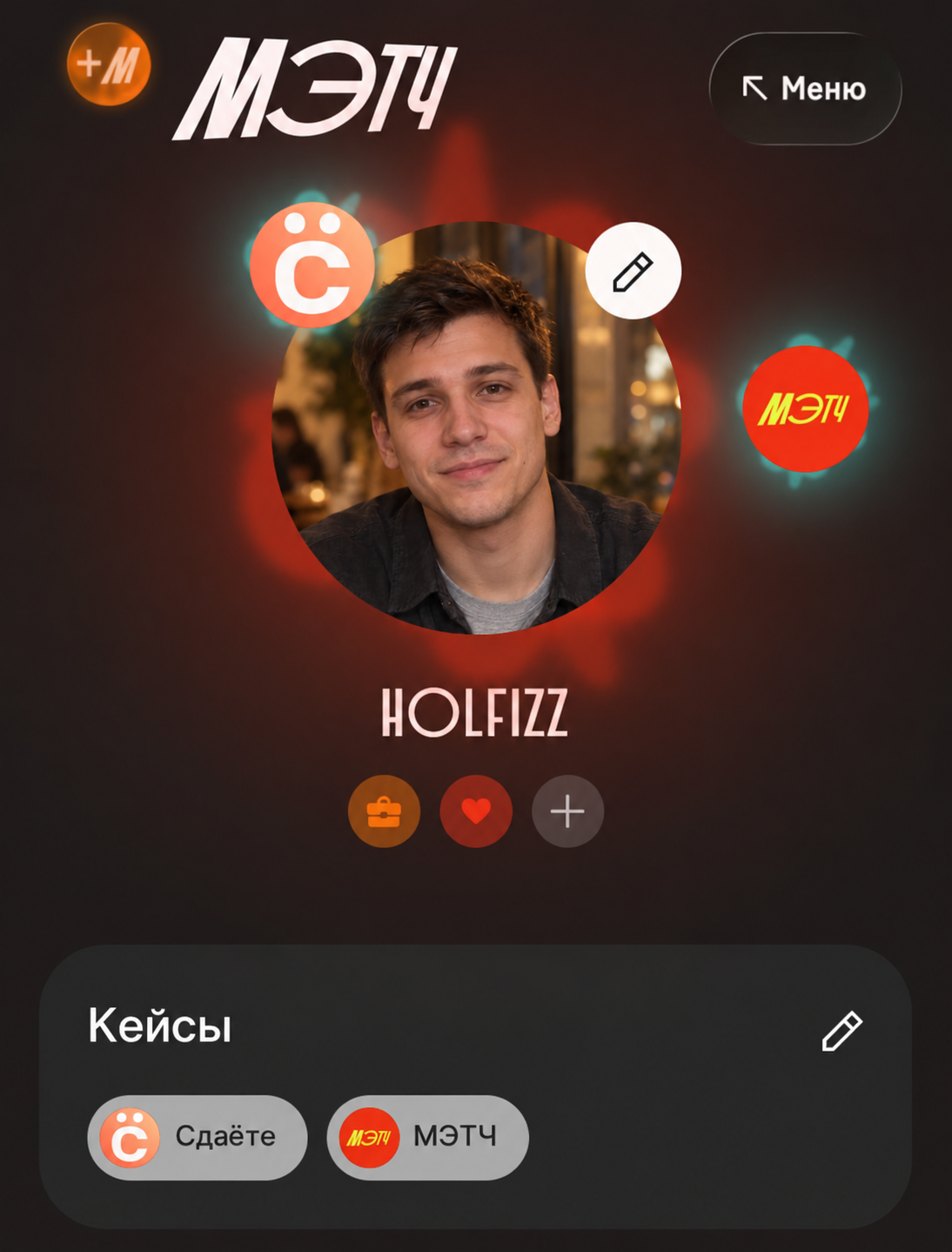
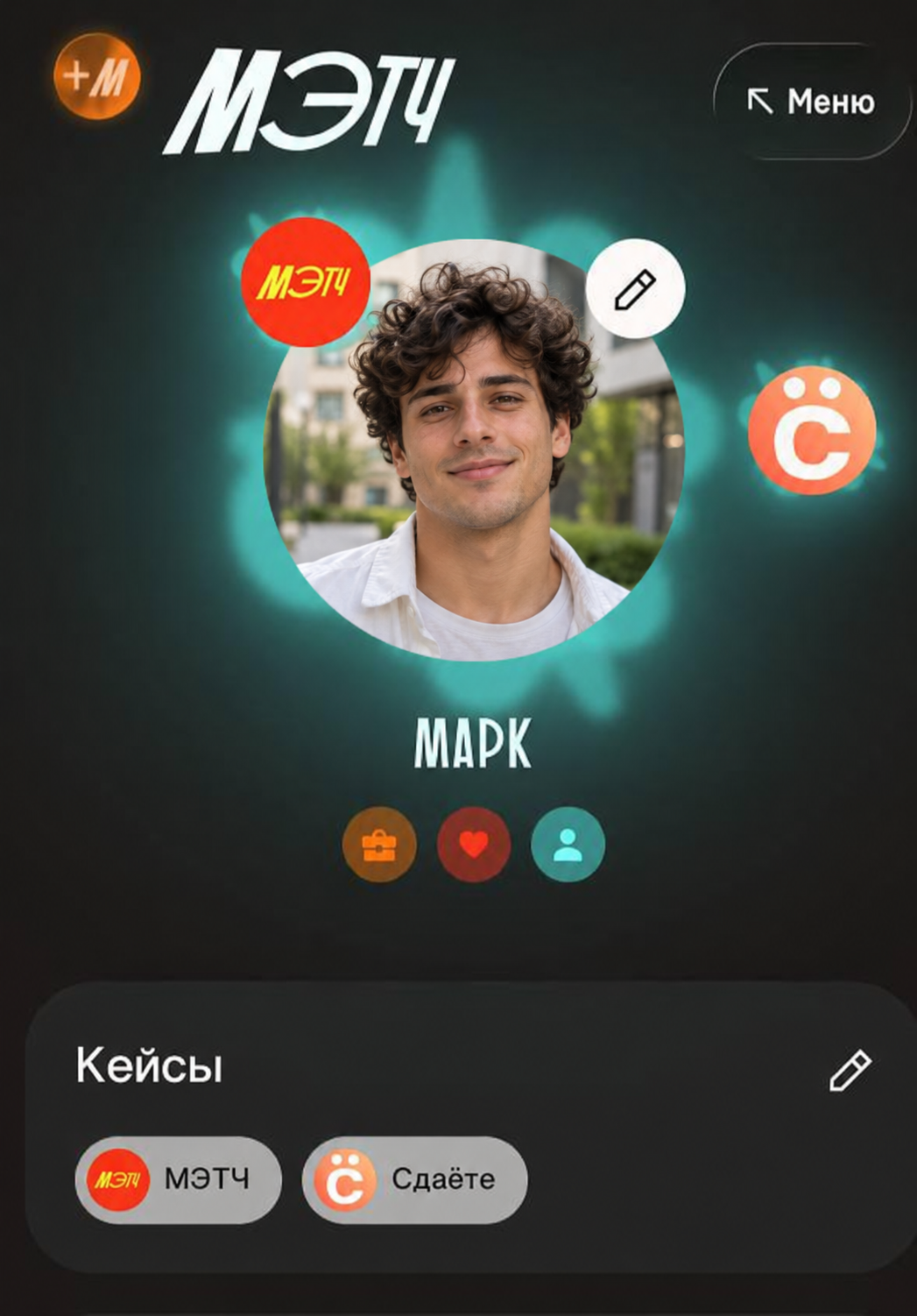
I worked on the profile, the likes section and navigation between screens. In networking I worked with the “looking for” and “can help with” badges: they explain which contact is useful to a person and what they can offer the community.
In their profile a person presents themselves through skills, values and cases. A colour aura, interest badges and project logos complement the photo. Cases can also be viewed as a separate list, so the profile shows what someone does as well as their name.
The profile photos have been replaced for publication.
The mechanic starts with a profile and filters. Then the person goes through cards: a swipe expresses interest or skips the profile. Mutual interest creates a match, and separate screens collect sent and received likes. Going back to a skipped card and a notification about a missed match complete this path.
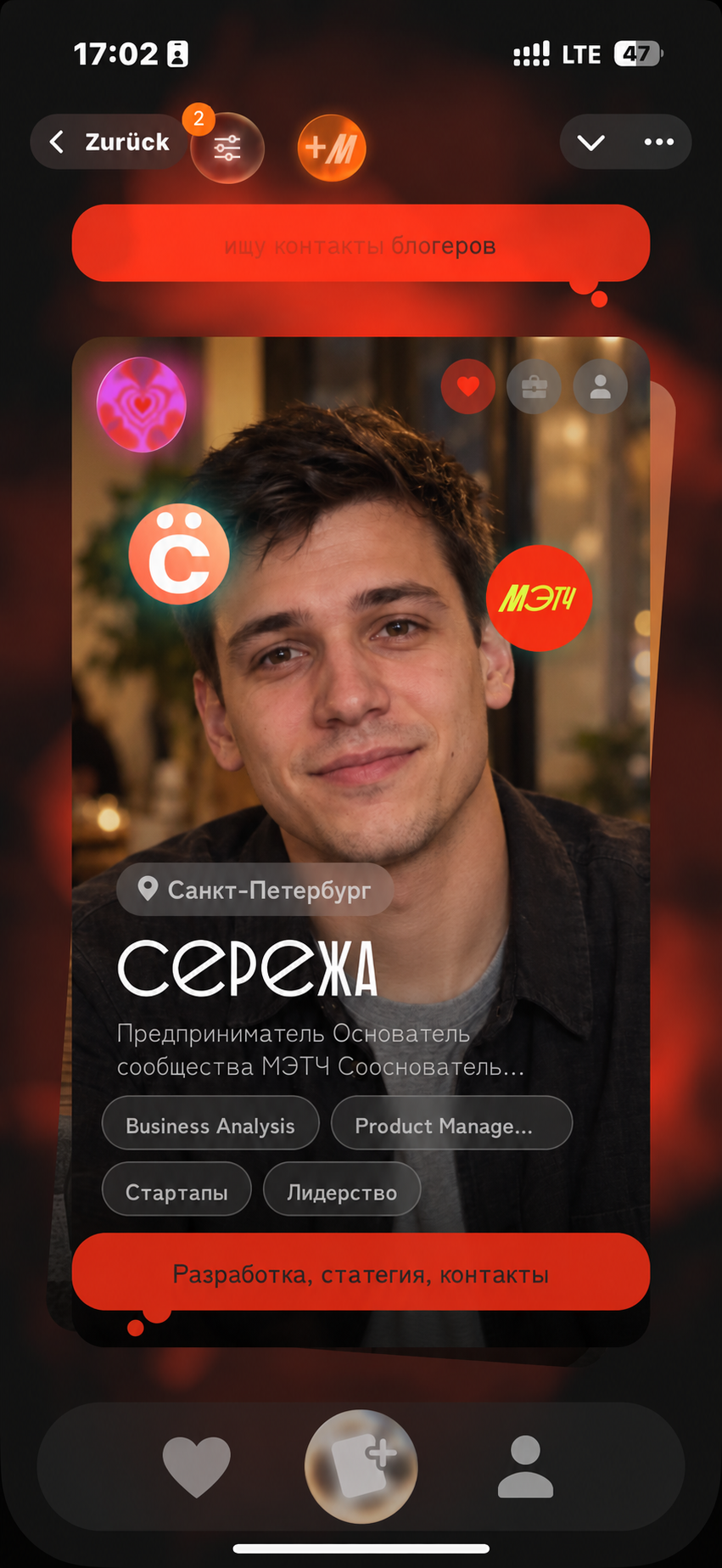
I also worked on the mega-like mechanic. In this scenario the participants could immediately see each other’s Telegram names and continue the introduction. The interface had to show how this step differs from a regular like and what the user gets.
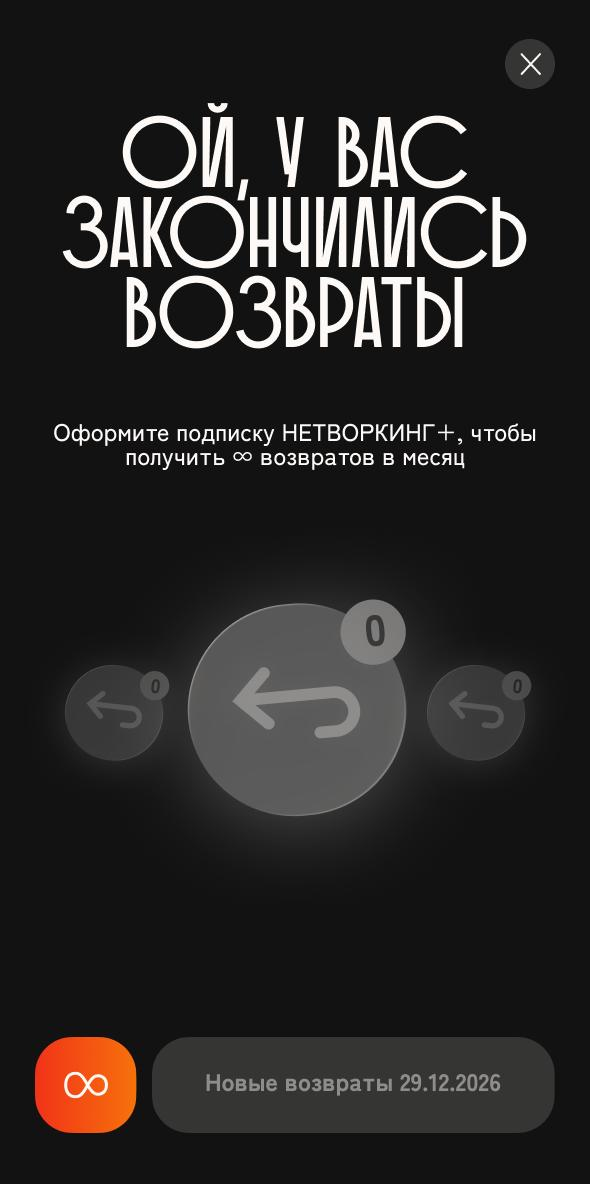
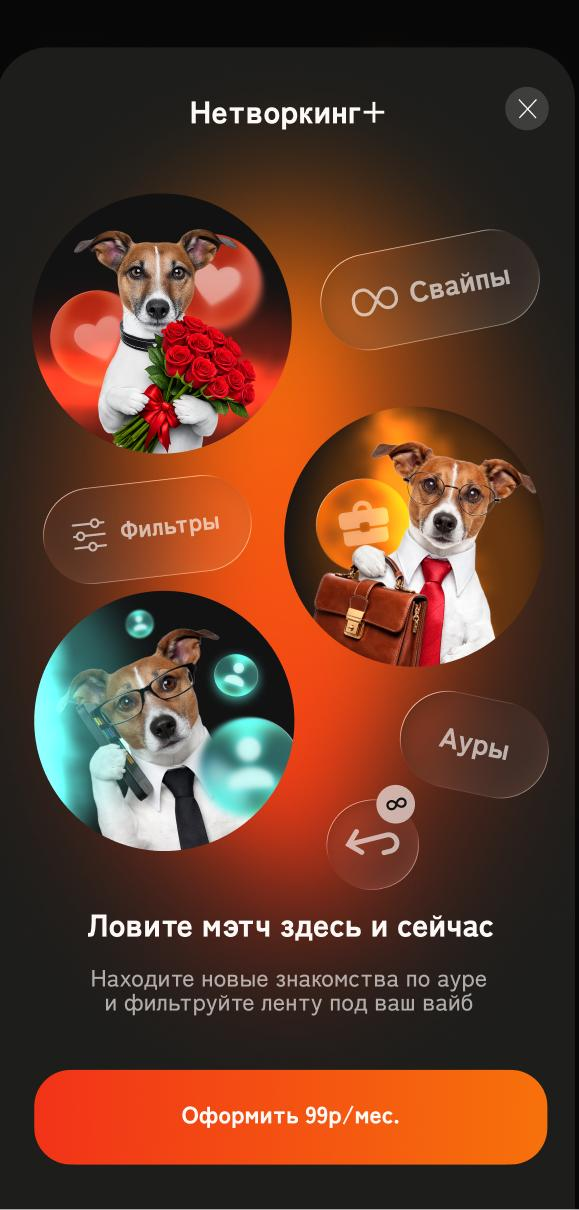
Action limits also have to be clear in the interface. For example, a separate screen explains why a skipped card cannot be brought back right now and when that action becomes available again. The Networking+ screen shows the extended features next to the regular networking scenario.
I also worked on responsiveness and the desktop version. A mini app is still a web application, so the layout of cards, forms and navigation has to be checked at different window sizes.
Learning and access after payment
I built the frontend of the learning section and the one-time link mechanic. Buying a course had to lead to access to the right material or channel. The product used YooKassa, and payment confirmation was tied to granting access.
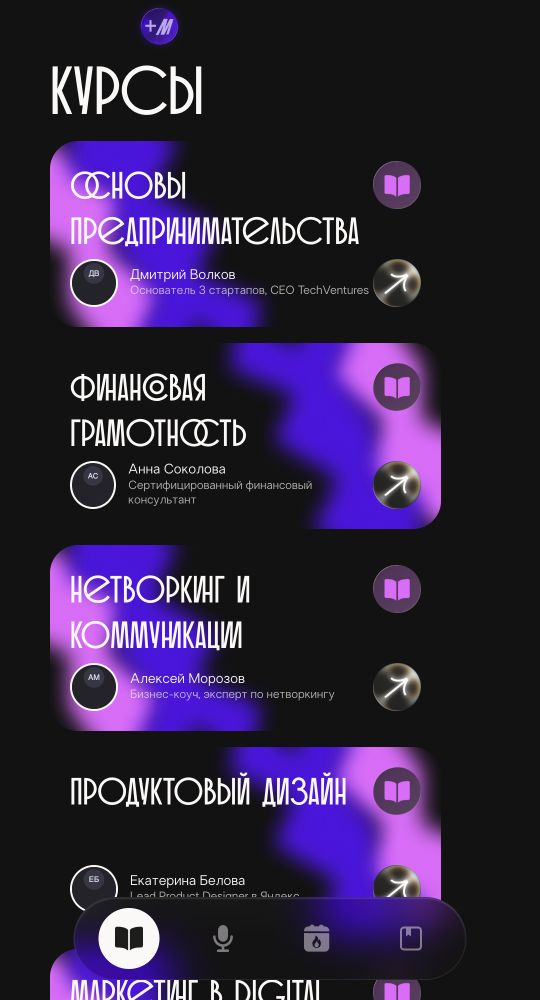
The course card distinguishes between a purchase and access already granted. A separate lectures section offers video or a podcast, and the calendar ties learning to an event date. This scenario needs the interface, the purchase status and the Telegram bot to stay consistent.
Progress in the tracker works separately: daily habit check-ins, sprint participation and completed tasks.
Referrals and acquisition
I improved the referral interface and anti-fraud: the reward was tied to a target action by the invited user. This made it possible to count real participation in the product.
I worked with segmentation by acquisition source and with advertising campaign analytics. The source helped connect a campaign to a later scenario, notification or offer within the community.
I built and improved the admin part, which brought together managing members, viewing analytics and working with campaigns. This took both an admin interface and the matching server operations.
Stack and releases
The frontend is built on Next.js, React and TypeScript, the server on NestJS, data on PostgreSQL via Prisma. A Telegram bot handles notifications and actions connected to the app.
I prepared deployment instructions, ran migrations and rebuilt the frontend, API and admin part. During a build, service addresses and the data schema version had to match the release.
What the project gave me
Match gave me experience developing an existing Telegram product: improving actions users already know, connecting them to server logic and preparing changes for release.
My contribution covered the learning web part, the profile and networking, referrals, responsiveness and operating instructions.